
A brief excursion into the recent history of Belovezhskaya Pushcha. Part One
By A. Raevskaya, Website "Belarusian Green Portal", 28.01.2011
It recently became aware of the resignation of Director General of the National Park "Belovezhskaya Pushcha". Nikolai Bambiza has been managing the National Park on behalf of the Presidential Department of Affairs for nearly 10 years, from May 2001 to January 2011. How was this bygone decade for Belovezhskaya Pushcha?
Sawmill as a gift
In December 1999, 60 years have passed since the establishing the Reserve "Belovezhskaya Pushcha". Launching of one more shop for timber processing (wood harvesting from Pushcha) was timed to this date important for nature protection in the country.
"Management in the Belarusian nature reserves put today on its head. The sawmill project started in Belovezhskaya Pushcha is one more confirmation of this ...," the editor and founder of the newspaper "Belovezhskaya Pushcha" Valery Dranchuk wrote about it.
From the outset, many called the new sawmill project in Belovezhskaya Pushcha as the next adventure of officials under the auspices of the almighty presidential administration. A sawmill capable of processing hundreds of thousands of cubic meters of wood per year was bought from a German businessman for the National Park. Belarusian Development Bank gave credit for the purchase and the government allowed making a pledge of assets, respectively, with the amount of the loan.
The timber processing line designed to process raw and freshly felled trees had to work for returning the loan and to make a profit for the Presidential Administration. It needed a specialist in commercial and economic development of protected areas to expand the volume of timber processing and economic activities in the forest of Belovezhskaya Pushcha.
After a year and a half since the new sawmill being put into operation in the village of Kamenyuki, a new director appeared in the National Park "Belovezhskaya Pushcha".
Bark beetle-General of Belovezhskaya Pushcha
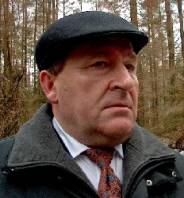
Nikolai Bambiza took this post. He earlier worked as director of another conservation area on the Pripyat River within 10 years. With his direct participation, the conservation status of the Pripyatskiy Reserve was downgraded in 1996 and thus the expansion of economic development was legitimized within its territory.
When introducing the new Director to the team of the National Park "Belovezhskaya Pushcha", Deputy Manager of the Presidential Department of Affairs Vasiliy Sudas spoke frankly and openly – it is to enhance economic activity and the new Director is a good specialist in wood processing.
In the first months of his stay in Belovezhskaya Pushcha, the new director tried to introduce technologies like ones applied in timber enterprises, in particular, clear sanitary cuttings. Bark beetles were declared the reason for this. The next outbreak of spruce bark beetles started just at this time in the forests of Belovezhskaya Pushcha.
Director insisted that the forest can be saved only if the conduct sanitary clear felling in the area of 50 hectares. The proposed measures contradicted the long-term practices of the forest management in Belovezhskaya Pushcha. Mass reproduction of bark beetles has been repeatedly over the long history of its existence, sometimes on a large scale than the outbreak of 2001. But extreme technologies, such as clear cuttings, were not used earlier. So, the forest remained and got self-healing.
It succeeded to stop clear cuttings in Belovezhskaya Pushcha through the intervention of the public but the logging continued. From 2001 to 2004 timber harvesting covered 575 ha of spruce forests in Belovezhskaya Pushcha. 1.2 million cubic meters of spruce wood were extracted.
In 2007, the annual income of the National Park was $ 25.63 million, $ 13.47 million of them were own revenues. Almost half (47.2%) of their own income was from the timber.
How to increase the area

The total area of the National Park "Belovezhskaya Pushcha" has increased significantly over the past 10 years - from 101.6 thousand hectares in 1999 to 164.5 thousand hectares in 2006. The increase was mainly due to the inclusion of adjacent farms and lands of forest timber enterprises.
The entire territory of the National Park is currently divided into four functional zones which protection regime differ from each other. The most stringent protection regime exists in the Wilderness Protection Zone. Any kinds of economic activity, except for scientific research, are forbidden there.
In 2004, the area of the Wilderness Protection Zone was almost doubled - from 15.7 thousand hectares to 30.0 thousand hectares. Now it is 30.7 thousand hectares, or 20% of the total area of the National Park. Only these 20% of the worldwide famous relic forest are truly protected in Belovezhskaya Pushcha.
In 1992, the Buffer Zone was 17.3% of the National Park. Thus, it increased by only 7% relatively the total area of the National Park over the past 10 years.
The Economic Activity Zone of the National Park has been increased almost 6 times - from 4.5% to 34.8% of the territory. Not only the tourist and forestry activities but also hunting, fishing, agriculture, trade, procurement and other activities are permitted in this zone, however with the proviso that it does not contradict the objectives of the National Park.
In late 2007, it became aware of ambitious plans to increase the Wilderness Protection Zone of the National Park from 30 thousand to 100 thousand hectares. The most stringent nature protection regime was intended to strengthen the historical part of the Forest where there are old-growth natural forests.
The Director General of the National Park has confirmed such plans and said the anticipated date of the increase of the strictly protected area - the end of 2009. However, the planned extension has not happened to the present.
A European Diploma
In 1997, the National Park "Belovezhskaya Pushcha" was awarded a European Diploma for achievements in nature protection, true, a few in advance. International experts found some shortcomings in the nature protection institution and recommended to eliminate them.
After 5 years, by 2002, the number of deficiencies in the nature protection activities of the National Park has doubled. According to the rules of the Council of Europe, the management of the National Park was proposed to prepare a unified Management Plan for the Biosphere Reserve for 10 years which would describe all the existing problems and would suggest ways to eliminate them.
The Plan was not prepared by the scheduled date - October 2007. Ministry of Foreign Affairs of Belarus sent a letter to the appropriate committee of the Council of Europe explaining the reasons for the delay with the Plan. In addition, they assured European experts that environmental and economic activities in Belovezhskaya Pushcha are in compliance with the recommendations of the Council of Europe. The Committee noted the explanation and moved the consideration of the Management Plan in November 2007, then in spring 2008, in spring 2009, and then in spring 2010.
The Committee of the Council has not received the full version of the Management Plan from the Belarusian side. The Diploma has been suspended, and its prolongation has been postponed. Experts from the Council of Europe expressed their willingness to see for themselves how the Management Plan for the National Park "Belovezhskaya Pushcha" will work. To evaluate the effectiveness of its work, the expert mission of UNESCO and the IUCN with involvement of independent Belarusian experts is scheduled for visiting in 2011.
According to information from the National Park "Belovezhskaya Pushcha", the summer of 2010, the leadership of the National Park began to discuss the possibility itself to abandon the Diploma. Image of the Belarusian environmental policy seriously injured because of the ugly history with the European Diploma. The country promotes its own unique National Park for many years and thus was unable to confirm the correctness of its management.
Write Your opinion / comment / idea to the Website's Forum