
Behind facade of wild nature protection
Inessa Zenina, Website "The Belarusian Green Portal", October 02, 2009
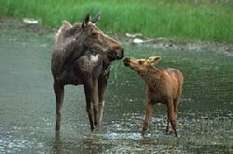
Now, when Belovezhskaya Pushcha celebrates its six-hundred anniversary, it is topical to think of "a tune of nature protection" – of all woodland "oases" in our county which we call especially protected natural areas (EPNA). Now the territory where people left the nature alone - it means they give a status of strict protection for the wild nature - is taking only 0.7 % of the total Belarusian area. Ecologists call this figure a criterion of humanity of the county's citizens.
The International Union for Conservation of Nature (IUCN) distinguished six principal classes and two subclasses concerning especially protected natural areas. Belarus has four classes - nature reserve, national park, special purpose's protected area and natural monument. Not all classes of especially protected natural areas in Belarus have analogs in the IUCN classification. Now the total area of all Belarusian EPNAs is less 8 % of the country's surface. Moreover, the prohibition of one or another economic activity that makes the wilderness's strict protection is not valid for the whole territory of the EPNA. In fact, such areas with strict protection's status make only 0.7 %.
A nature reserve as the highest class of nature protection
The history of nature protection in our country knew times of flying up and fall. The modern time is not the best in this history. Nature protection in the EPNAs demonstrates the tendency of weakening, while exploitation of natural resources becomes more intensive. Since 1991, no one nature reserve - an EPNA of the highest class of nature protection – has been created. Moreover, in 1996, the Pripyatskiy Landscape-Hydrological Nature Reserve created in 1969 has lost its status. The Berezinski Biosphere Reserve is only the area of the highest class of nature protection which still kept this status. It should be noted that the strict nature protection is really in force only in 47.2 % of its area.
In 2008, the total area of the EPNAs in Belarus decreased and reached to a level of 2000. Creation of new nature reserves and national parks is not in plan before 2015.
Parks for the nation
The total area of national parks in Belarus is nearly 23 % of the total surface of all EPNAs. In 1991, Belovezhskaya Pushcha got a national park's status the first in Belarus. The second National Park "Braslav Lakes" has been created in 1995, and in 1996 the Nature Reserve "Pripyatskiy" has been reorganized into the national park. The National Park "Narochanskiy" appeared in 1999.
The activity of Belarusian national parks put a question to the society - is a national park the tool to earn money or is it the national property with the appropriate access for the people? Mass attraction of visitors and advertisement to come to national parks are now in progress. What for? Is it to unite them the idea of reverence for life or to get more money?
The advertisement helps attract a big attendance in national parks. We can offer something for any fancy - a Nature Museum, a Father Frost, restaurants, enclosures with wild animals, an arboretum with exotic plants, fishing, hunting, etc. The attraction of visitors to get profit becomes the primary objective, and ecological education is the formality. You can compare, a tourist can get free of charge nearly ten of different booklets and newspapers about nature reserves and wild nature in a visit-centre of Latvian nature reserves "Tachy" and "Krustkalni". When you visit the national park "Pripyatskiy", you can buy booklets only for your own money. However, the state of affairs like this is rather a paradox of the society. It is as absurd as if somebody suddenly began press tourists to take the excursion in a depository of the country's gold reserve and, at the same time, to sell out the gold for souvenirs.
It is forgotten in chase of profit that national parks in law are institutions dealing with nature protection, ecological education and research but not entertainment grounds for mostly making profit.
The Second World Conference on National Parks held in 1972 in the Yellowstone National Park in USA has established a fact that no one national park all over the world could brake through the problem of conservation of the natural complex within its own territory. The conference has come to the conclusion that the reason of this is resulted from the contradiction in the idea of national parks which tries to combine nature conservation and recreation.
We, who live in Belarus, have to take into account the long-term experience in other countries, instead of repeating their mistakes and doing that own.
From a law
The analysis of the Belarusian nature protection law does not let to call it favourable for wilderness conservation. The long-term practice and experience of EPNAs' activities in other countries have shown that classes covering the Belarusian EPNAs and forming their nature protection statuses are not enough. For example, from the law, all national parks are joined in the united class with the same approach to nature conservation and nature use, although these EPNAs are very different by state of biodiversity and economic traditions.
The fact that the Law "On Especially Protected Natural Areas and Objects" does not include biosphere reserve as the EPNA's class is one of the examples of the inconsistency between the Belarusian laws and the reality. It is because the Berezinsky Biosphere Reserve and Belovezhskaya Pushcha, in fact, belong to this class. In Belarus there are no strict nature reserves if to follow the classical understanding of this term. The Law has no World Natural Heritage Site of Mankind as the EPNA's class either, although Belovezhskaya Pushcha actually has this status. The Belarusian part of Belovezhskaya Pushcha has simultaneously three statuses and belongs to three classes of especially protected natural areas - National Park, Biosphere Reserve and World Natural Heritage Site of Mankind. But our Law does not mention it at all.
The lawyer in ecology Grigojriy Fedorov calls the dominance of economic interests over ecological one when taking legal deeds as the main problem regarding the Belarusian EPNAs. Most probably, that is the reason why the Regulations on Nature Reserves has no the point to interdict recreation and tourism there.
The Law "On Especially Protected Natural Areas and Objects" does not have the straightforward prohibition on deprivation of the status of nature reserves. The Article 17 of this Law allows designing some recreation zones within the borders of the nature reserve, but it does not mention a zone of wilderness strict protection and does not lay down the prohibition on deprivation of such zones of their status. It makes legally admissible the exchange of this status between different sites within the borders of the nature reserve and completely meaningless the long-term existence of the sites with the strict nature protection status. The change of the borders of strictly protected zones was applied more then once in the national parks "Pripyatskiy" and "Belovezhskaya Pushcha". What does it mean? It means that hunting and timber harvesting exhausted potentialities in one part of the national park and the economic expediency appears to move them to another part, with the status of wilderness strict protection.
All these incidents of our nature protection legislation testify that the present Law "On Especially Protected Natural Areas and Objects" needs to be radically improved.
How much does the wild nature cost?
Nowadays it is fashionably to estimate natural resources as economical values. But how can we value at the sum of money a draught of fresh air or a good for a man contemplating the nature? A protected forest is not the sum of economic values of all its trees, animals, birds and other beings. It is much more and we cannot put it into money, but if we lose this we cannot buy it for all money of the world.
Everything what is going in the state nature protection establishments of the Belarusian country is characterized first of all as the governmental ecological policy. The public have the right to influence on it and to press for the authorities that to extend the size of our especially protected natural areas, and to improve and observe the nature protection law.
Write Your opinion / comment / idea to the Website's Forum